
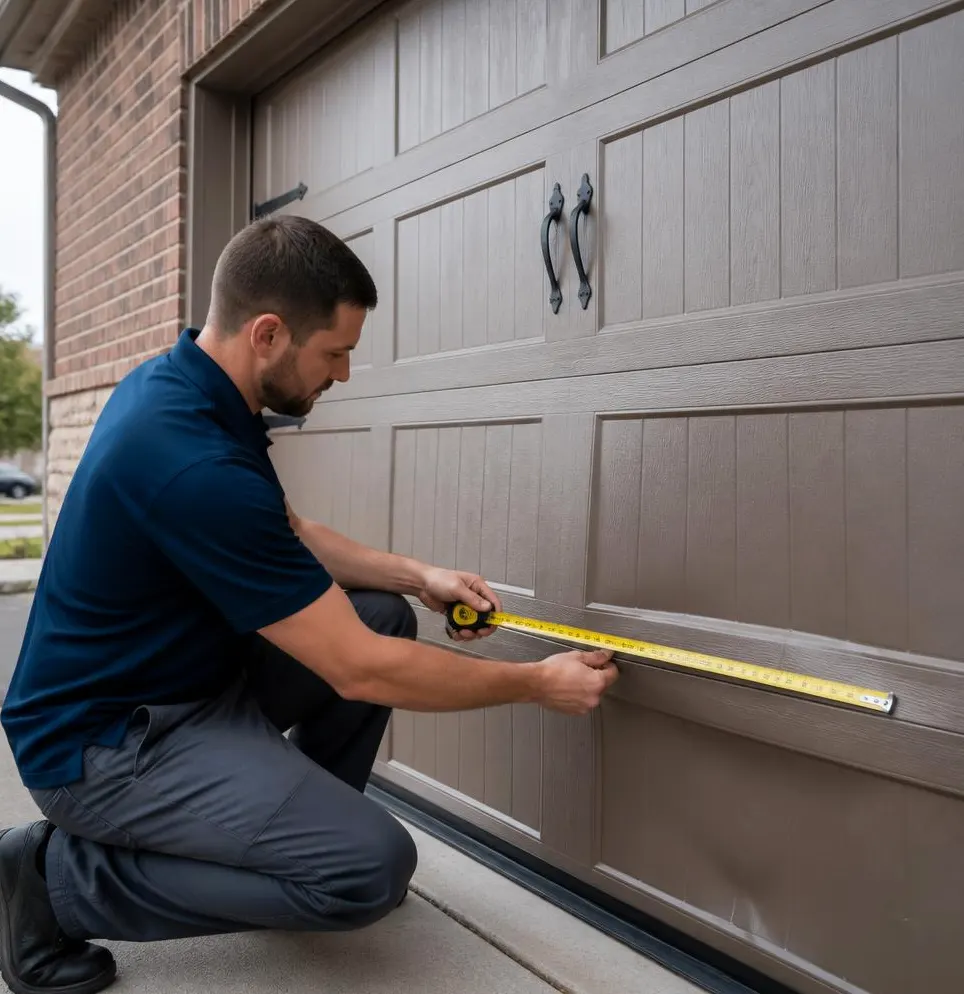
The Moment You Notice It
You hit the button, the door starts down, and halfway through it stops and goes right back up. Or maybe it won't even start closing — it just sits there with a small light blinking near the floor on one side of the track. You try again. Same thing. Nothing looks broken. The door still opens fine. It just won't shut.
That blinking light is coming from your photo-eye sensors — the two small plastic eyes mounted a few inches off the garage floor, one on each side of the door opening. They send an invisible beam across the doorway, and if anything breaks that beam while the door is closing, the opener reverses the door immediately. It's a safety feature, not a malfunction, even though it feels like one at 7 a.m. when you're trying to leave for work.
Why They Trip So Often Here
Photo-eye sensors are simple, but they're also sensitive, and Murdock's climate gives them plenty of reasons to act up.
- Humidity and condensation — On muggy mornings, especially after a cooler night, moisture can fog the lens of the sensor just enough to scatter the beam. The door reads it as an obstruction and refuses to close.
- Spiderwebs and insects — Garages near green space or water (common throughout Port Charlotte, Rotonda West, and Englewood) attract spiders that build webs directly across the sensor path overnight. A single strand is enough to break the beam.
- Dust and pollen film — Afternoon downpours followed by sun tend to leave a fine residue on everything, including sensor lenses, which gradually blocks the beam rather than cutting it off all at once.
- Vibration and settling — Homes on slab foundations shift slightly with seasonal moisture changes, and garage door tracks can shift with them. Over time this nudges the sensor brackets out of alignment by just a degree or two — enough to break the connection.
- Sun glare — If your garage faces west, low afternoon sun can shine directly into one sensor's receiver and overpower the beam, causing random reversals in late afternoon that disappear by evening.
How Bad Can It Get
Most of the time a tripped sensor is just an inconvenience — a door that won't close until you fix the problem. But there are two ways it gets worse. First, if the sensors are dirty or slightly misaligned but not completely blocked, the door may close most of the way and then reverse unpredictably, which is hard on the opener's motor and gears over time. Second, and more seriously, if a homeowner responds to a nuisance sensor by disconnecting or bypassing it, the door loses its ability to detect a person, pet, car bumper, or stored item in its path. A door that closes on something or someone with no sensor to stop it is no longer a minor annoyance — it's a real injury and property-damage risk.
Cleaning and Aligning Them Yourself
Before assuming you need a repair, check the basics. This takes about ten minutes.
- Wipe both lenses with a soft, dry microfiber cloth. Avoid household glass cleaner with ammonia, which can leave a film. A barely damp cloth followed by a dry one works better in humid conditions.
- Check for webs or debris in the sensor brackets and along the beam path at floor level, including anything stored in the garage that might be creeping into the sensor line.
- Look at the indicator lights on both sensors. Most units show a solid light when properly aligned and a flickering or dim light when the beam is off-center or obstructed.
- Check the brackets by hand — gently see if either sensor wiggles or has rotated slightly on its mounting arm. If one is tilted even slightly compared to the other, that's often the whole problem.
- Realign if needed by loosening the wing nut or screw holding the sensor, adjusting it so both units face each other squarely at the same height, and tightening once the indicator light goes solid.
- Test the door several times after cleaning or adjusting, including closing it at different times of day if you suspect sun glare.
If the lights are solid, the lenses are clean, and the door still won't close reliably, the issue is likely electrical — a frayed wire, a failing sensor unit, or a problem at the opener's logic board rather than anything you can fix by hand.
Why You Should Never Bypass Them
Every garage door opener sold in the United States since 1993 has been required to include this reversing safety system, and for good reason: before that requirement existed, garage doors caused serious injuries by closing on people and pets who didn't trigger a manual stop in time. Some older opener models have a setting that lets you disable or ignore the sensors entirely. Doing this to solve a recurring nuisance trip removes the one feature designed to stop the door the instant something or someone is underneath it. If your sensors are tripping often enough that you're tempted to disconnect them, that's a sign they need real service, not removal.
When to Call Precision Garage Door of Murdock
If you've cleaned and realigned the sensors and the door still reverses, hesitates, or won't close at all, it's time for a professional look. Our technicians can diagnose whether the issue is a failing sensor, damaged wiring (often from moisture intrusion or pest activity in the garage), or a worn opener logic board. We offer Garage Door Opener Installation for units that need full replacement, and our Garage Door Tune-Up & Maintenance service checks sensor alignment, wiring, and overall opener function before small issues turn into a door that won't close at all.
If your garage door in Murdock, Port Charlotte, Punta Gorda, or anywhere in Charlotte County is giving you sensor trouble, call Precision Garage Door of Murdock today and we'll get it diagnosed and working safely again.