
The short answer
In most rental situations, the landlord is responsible for keeping the garage door and opener in safe working condition — that means springs, cables, the opener motor, and structural problems with the door itself. The tenant is usually on the hook for damage they cause: backing a car into the door, letting kids slam the remote buttons into failure, or simply not reporting a problem until it turns into a bigger one. Normal wear from age and weather falls on the landlord's side. Damage from misuse falls on the tenant's side. The argument usually isn't about the rule — it's about which category the broken part falls into.
Why this fight happens in the first place
Garage doors almost never get a specific line in a lease. Leases cover the roof, the AC, the appliances, and then garage doors get lumped into "structures" or ignored completely. So when a spring snaps or an opener dies, both sides are guessing at who's supposed to pay, and neither one wants to be wrong by a few hundred dollars.
What's generally the landlord's job
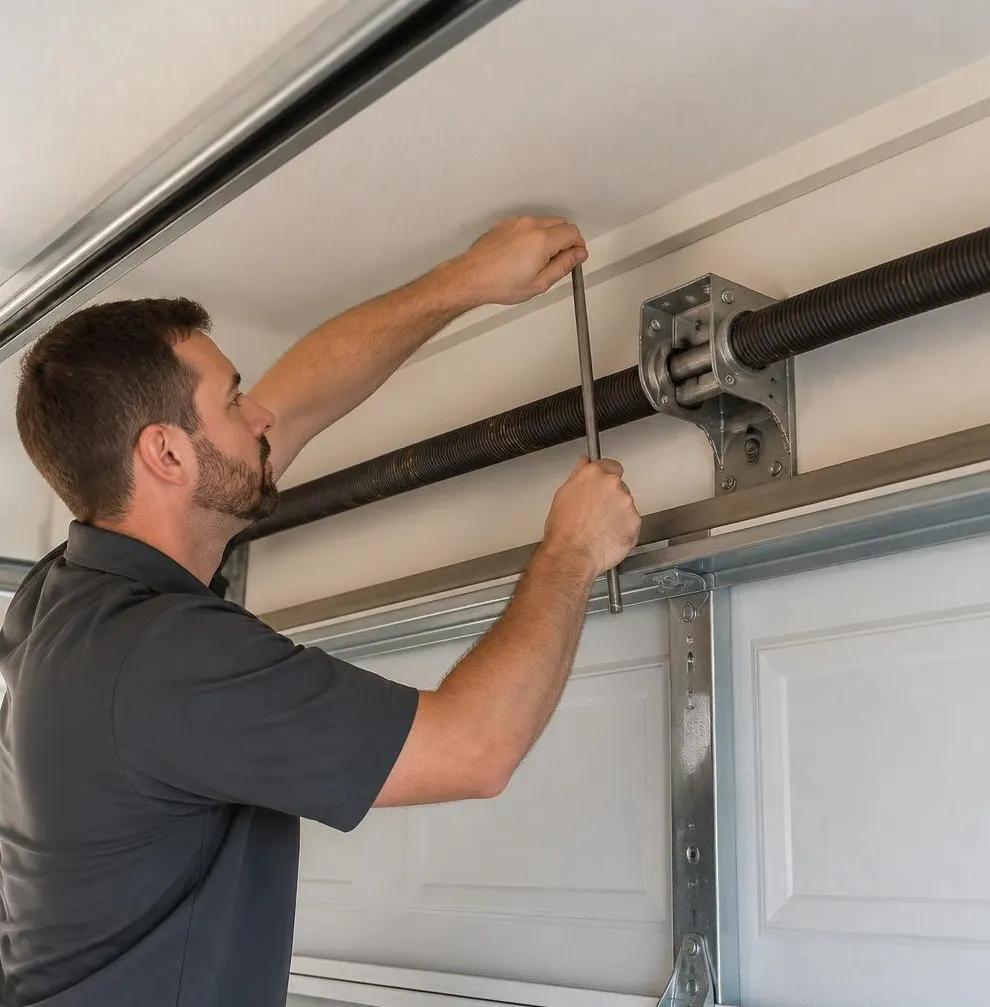
- Broken torsion or extension springs (these wear out from cycle count and age, not misuse)
- A failing opener motor, especially one that's simply old
- Frayed or snapped cables
- Rust and corrosion eating through panels or hardware, which happens faster here thanks to salt air and constant humidity
- Track or hardware that's warped or swollen from moisture
- Any safety issue — a door that won't reverse, a door that falls unexpectedly
What's generally the tenant's job
- Dents or cracked panels from a car, bike, or ladder hitting the door
- A broken remote or keypad from obvious abuse or neglect
- Damage from leaving the door open during a storm when it should've been closed
- Failure to report a problem that then causes additional damage (a scraping noise ignored until the door jumps the track)
None of this is law — it's standard practice in most leases, and the actual lease language is what governs any specific property. If the lease is silent, this is the default most landlords and tenants land on, and it's a reasonable starting point for a conversation instead of an argument.
The move-in inspection: what to actually check
Most move-in walkthroughs cover the obvious stuff — walls, appliances, flooring — and skip the garage door entirely. That's a mistake in this climate, where humidity and salt air can already be working on hardware before a new tenant ever signs. Spend ten minutes on this before move-in day:
- Open and close the door manually (disconnect the opener first) and feel for binding, grinding, or uneven movement.
- Check the springs for visible rust, gaps, or stretching. You don't need to know how to fix them — just note their condition with a photo.
- Inspect the cables on both sides for fraying, especially near the bottom bracket.
- Test the auto-reverse by placing a 2x4 flat on the ground under the door and running it down. It should reverse on contact.
- Look at the panels for dents, cracks, or soft spots — swelling along the bottom panel is common in older doors that have taken on moisture.
- Check all hardware — hinges, rollers, brackets — for rust, especially if the property is closer to the coast.
- Test the opener from the wall button and from a remote, and check that the keypad (if there is one) works.
Photograph everything and date the photos. Send them to the landlord or property manager as part of the move-in paperwork. This single step prevents almost every move-out dispute about who broke what.
The gray area: storms
Charlotte County's storm season complicates things. If wind load damage happens during a named storm, that's typically a landlord and insurance issue, not a tenant fault issue — but a tenant who left the door open during high winds when they had time to close it may share some responsibility. This is exactly the kind of thing worth clarifying in writing before hurricane season starts, not after a door is lying in the driveway.
When to call Precision Garage Door of Murdock
Whether you're a landlord trying to document a pre-existing issue or a tenant trying to get an honest answer before pointing fingers, a professional inspection settles the argument fast. Precision Garage Door of Murdock can run a full Garage Door Tune-Up & Maintenance visit to assess spring tension, cable wear, rust, and opener condition, and tell you in plain terms what's age-related and what's damage-related. If something's already failed, our Garage Door Spring Repair and Garage Door Cable Repair services get it functioning safely again the same visit in most cases.
If you're in Murdock, Port Charlotte, Punta Gorda, or anywhere nearby and need a neutral, professional read on a garage door before (or after) a move-in, call Precision Garage Door of Murdock. We'll tell you exactly what we see.