
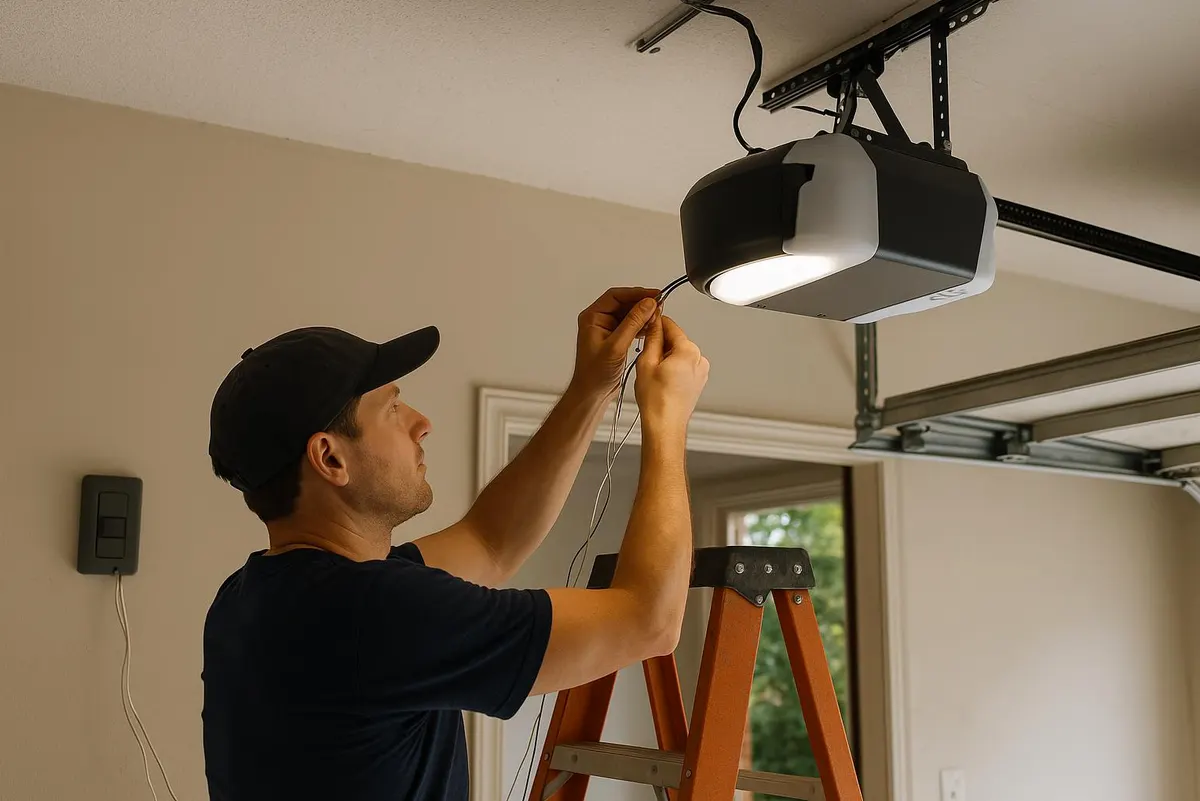
What a Technician Sees This Time of Year
A typical call in late fall looks like this: a homeowner says the garage door suddenly started squealing, or it's sticking halfway up when it never used to, or there's a grinding sound that wasn't there over the summer. Nine times out of ten, it's not a new problem — it's the tail end of hurricane season showing up as the weather finally dries out. Months of humidity, afternoon downpours, and salt air leave residue, rust, and swollen wood behind. When the air turns drier and cooler, those materials shift again, and whatever was quietly wearing down finally makes noise.
Winter in Charlotte County doesn't mean snow or freezing pipes, but it is a real change: lower humidity, cooler nights, occasional cold fronts, and a break from daily storms. That shift is actually the best window of the year to catch up on garage door maintenance before next summer's heat and storms come back around.
Check the Tracks and Rollers for Storm-Season Buildup
Afternoon downpours all summer push grit, pollen, and humidity into the tracks. That residue mixes with grease and turns into a gummy film that makes rollers bind or skip. Wipe the tracks down with a damp cloth, then run the door up and down by hand (with the opener disconnected) to feel for rough spots. If it doesn't glide smoothly, a light coat of garage-door-specific lubricant on the rollers and hinges — not the tracks themselves — usually solves it.
Look for Rust Before It Spreads
Homes closer to Charlotte Harbor or the coastal side of the service area deal with salt air on top of regular humidity, and that combination accelerates corrosion on springs, hinges, and bottom brackets. Cooler, drier weather is a good time to spot rust early, while it's still surface-level. Small orange spots on a torsion spring aren't just cosmetic — rust weakens the coil and can cause it to snap without warning. If you see flaking or pitting, that's worth having inspected rather than ignored.
Springs Behave Differently as Temperatures Change
Garage door springs are calibrated to a certain tension, and both heat and humidity affect how they perform. As temperatures drop through the fall and winter, steel contracts slightly, and a spring that was already weakened from the stress of hurricane season can finally give out. Signs include the door feeling heavier than usual when opened manually, the opener straining or reversing unexpectedly, or a visible gap in the spring if you look up at it (from the ground, never underneath). Spring repair is not a DIY job — the tension involved can cause serious injury — but recognizing the warning signs early means you can get it handled before it fails completely, often at the most inconvenient moment.
Inspect Weatherstripping and Seals
The rubber seal along the bottom of the door and the stripping around the frame take a beating from UV exposure and heat all summer. By fall, it's common to find it cracked, brittle, or pulling away. In this climate, that seal isn't just about temperature — it keeps out wind-driven rain, dust, and small pests looking for a dry place as the weather cools. Replacing worn weatherstripping is inexpensive and straightforward, and it's one of the easiest wins during a seasonal check.
Test the Opener and Safety Features
Power blips are more common during storm season, but surge damage doesn't always show up right away. Test the auto-reverse safety feature by placing a block of wood in the door's path and making sure it reverses on contact. Check that the photo-eye sensors near the bottom of the track are clean and properly aligned — summer storms and humidity can knock them out of position or leave grime on the lenses, causing the door to refuse to close.
When to Call Precision Garage Door of Murdock
If your door is sticking, grinding, sagging on one side, or the spring shows visible rust or gaps, it's time to call in a professional rather than troubleshoot further. Our technicians handle Garage Door Spring Repair for doors showing wear after a long storm season, and our Garage Door Tune-Up & Maintenance service covers the full inspection — tracks, rollers, hardware, opener, and seals — so small issues get caught before they turn into a dead spring or an off-track door in the middle of next year's storm season.
Give your garage door the same seasonal attention you give the rest of your home. Call Precision Garage Door of Murdock today to schedule a tune-up and head into the new year with a door that's ready for whatever Charlotte County weather brings next.